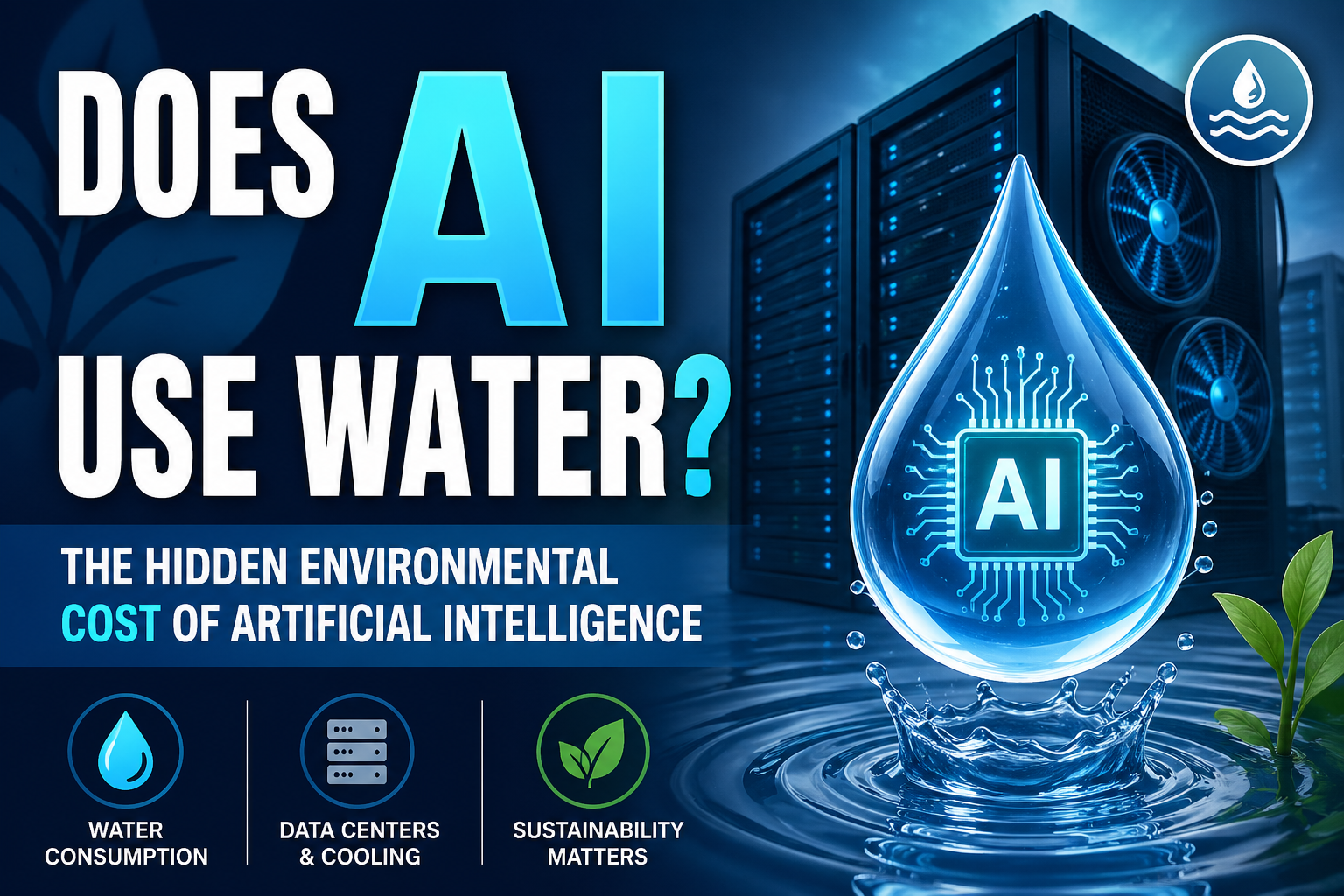
Does AI Use Water? Understanding the Hidden Cost of Artificial Intelligence
Artificial intelligence is progressing at lightning speed, inspiring innovations such as ChatGPT and transforming industries across the world. But underlying this digital transformation is a pertinent question most haven’t thought about — does AI use water? It does. AI may be a software tool, but it relies on hardware infrastructure, which is physically created and uses water. Let’s break down the workings for you to see how.
How Exactly AI Uses Water
AI models do not consume, or 'drink' the water per se. They use enormous data centres. The hardware infrastructure in the data centres needs cooling to work efficiently, using water.
Data centres use water for cooling. The procedure is evaporative cooling, which entails water being passed over heated infrastructure in a cooling tower for some of the water molecules to absorb the heat and cool the hardware.
Tech companies such as Google and Microsoft own and operate huge data centres, which use water for cooling so the AIs do not overheat.
Why Cooling AI Systems Consume So Much Water
Training AI models requires a lot of computation. The more complicated the AI model, the more heat is generated by the computers. Cooling systems can use either chilled water or cooling towers. It’s not uncommon for millions of liters of water to be used every year at a single large data center.
So the more that AI usage expands, the more water (indirectly) is required.
Real-World Example: AI and Water Use
Large AI models used for chatbots and image generators can use a lot of water, when combined with electricity use.
For example, running AI services at scale, like chatbots or image generators, continuously requires cooling systems to stay active. Over time, this adds up to a noticeable environmental impact.
Environmental Impact of AI Water Usage
Water is a valuable resource in many parts of the world. High water consumption in data centers can lead to depletion of local water supplies, especially in areas prone to drought.
That raises the issue of responsible AI development, and as AI heats up, companies face increased calls for green solutions.
Are Tech Sites Responding?
Yes, most companies have plans in place to reduce their water consumption. Google, for example, vows to be water positive (i.e., replenish more water than what it consumes).
Microsoft has also been investing in new cooling technologies that won’t need as much water.
What This Means for the Average User
As a user, you may not notice AI using water, but your activity does create demand. Every Google question you enter into a search engine or image you request is run on a server somewhere that requires cooling.
This doesn’t mean you’re a bad actor or that you shouldn’t be using AI, but it is something to be aware of.
Final Thoughts
So, does AI use water? Yes, just not directly. Think about large data centers and, by proxy, it is a water consumer.
Advances in technology cannot come without thinking about the impact. While using platforms like PenHuman can net you better quality content, understanding the answer to ‘does AI use water’ is also a plus.