
How to humanize AI grant proposals without changing facts
Humanize AI grant proposals without changing the proposal
To safely humanize AI grant proposals, improve clarity, flow, and voice while keeping the proposal itself intact. Eligibility statements, project aims, dates, budget figures, citations, staffing commitments, and required terminology are not matters of style; they are source-controlled facts. A natural rewrite should make the case for support easier for a reviewer to follow without creating a different project on the page.
Effective AI grant proposal editing keeps expression separate from substance. You can turn a vague opening into a direct one, link an activity to its purpose, or cut repetitive transitions. You cannot present an uncertain outcome as guaranteed, expand the target population, introduce an unsupported credential, or alter what the budget will buy. That boundary must be set before a rewriting tool sees the text.
NIST AI 600-1 is not a grant-writing standard; it is a voluntary Generative AI risk-management resource, and its treatment of risks like confabulation, privacy, and information integrity is still a useful reminder—generated prose is a candidate, not evidence. The applicant is still responsible for checking the words against current instructions and approved project records.
Start with the current funding opportunity and application guide
Start with the exact opportunity you plan to pursue, not a saved template or a summary from a previous round. Grants.gov directs prospective federal applicants to confirm eligibility, identify the relevant opportunity, and complete the associated application through Workspace. The order matters because even a polished narrative cannot fix a mismatch among the applicant, the project, and the selected opportunity.
For an NIH application, the agency identifies the current application guide and the funding opportunity as the key references for attachment requirements. It also notes that a particular project may need only a subset of the forms and attachments covered by its general advice. This NIH-specific example reflects a broader editing rule: live funder instructions outrank generic writing advice.
Before drafting, assemble a compact source packet containing the opportunity page, the current application guide, amendments or notices, internal approvals, the approved scope, the working budget, the project timeline, partner commitments, and references supporting factual claims. For each item, record its owner and when it was checked so a reviewer can resolve conflicts without having to guess.
- Current opportunity and application instructions
- Eligibility and organizational approvals
- Approved aims, activities, outcomes, budget, and timeline
- Evidence sources, citations, partner commitments, and required attachments
Lock eligibility, budget, timeline, and evidence facts
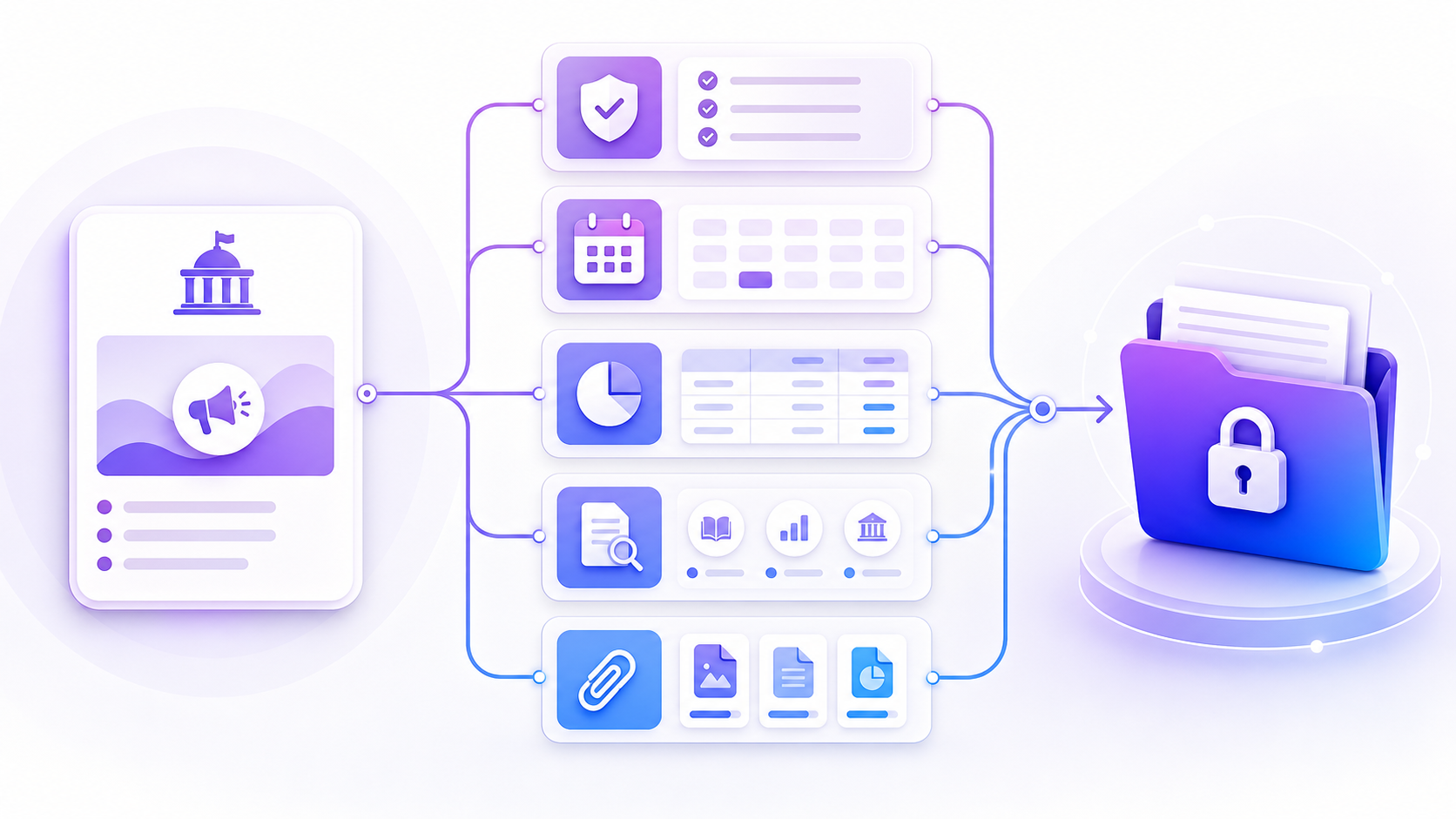
A fact lock is a concise register of language that editing must not change. During grant proposal review, record the applicant type, geographic scope, funding period, deadline, requested amount, cost categories, named partners, participant counts, methods, cited findings, and promised deliverables. The register makes it easier to preserve proposal evidence by giving reviewers a finite set of approved inputs against which they can compare a candidate.
Budget language deserves a separate lock. NIH advises applicants to check the relevant opportunity for limits and restrictions, noting that its budgeting tips do not replace the applicable instructions. The agency also links necessary project costs to the work described in the proposal. Keep the scope clear: this guidance applies to NIH research applications, while another funder may specify different forms, categories, tests, or review steps.
Connections between facts matter just as much as individual values. A narrative may assign an activity to one team member while the budget supports another, or promise work before a prerequisite appears on the timeline. Flag these links in the source packet. Even when its numbers remain accurate, a rewritten sentence can mislead if it breaks the connection among cost, owner, date, method, and outcome.
- Exact names, identifiers, dates, amounts, units, and cited findings
- Eligibility language, scope boundaries, and required terminology
- Dependencies among aims, activities, personnel, budget, and timeline
Separate voice edits from proposal decisions
Set up two lanes for AI grant proposal editing. The voice lane addresses sentence order, concrete subjects, transitions, avoidable repetition, and clear explanations of specialized terms. The decision lane holds scope, methods, evidence, staffing, eligibility, budgets, schedules, and commitments. A writer may work freely in the voice lane only if the decision lane stays frozen and traceable to an authorized source.
Human prose often reads more clearly when the actor and action come first. Identify the team that will do the work, explain why the step belongs in the project, and connect it to the approved aim. Vary sentence length when it improves rhythm, but keep logical conditions beside the claims they limit. Confidence should come from precise support, not stronger adjectives or broader promises.
Treat every substantial improvement as a proposal decision, even when it seems like a minor wording change. Adding a population, broadening an outcome, replacing a cautious verb, or inserting a more impressive statistic changes the application. Route that change to the project owner and evidence owner. If they approve it, update the source packet first, then revise every connected section deliberately.
Edit AI-generated grant proposals one paragraph at a time
The safest way to edit AI-generated grant proposals is to send one full paragraph at a time, along with a narrow instruction about clarity and tone. A paragraph is big enough to preserve its reasoning and small enough to compare closely. Whole-section rewrites can silently move a limitation, merge separate claims, or disconnect an activity from the evidence and budget that support it.
Keep the original, the generated candidate, and the reviewed version side by side. First, ask whether the candidate says the same thing. Then compare names, dates, quantities, citations, modal verbs, negation, and defined terms. Finally, read for grammar and natural flow. If the candidate fails a factual check, repair the most useful wording from it rather than pretending the unchanged source was humanized.
A tool such as PenHuman can help you generate an editing candidate, but the tool does not become the authority for the application. Present only material that you are authorized to process, follow your organization and funder rules, and keep a human reviewer in charge. The technical-documentation review workflow follows the same pattern, generating locally scoped prose, comparing it to the source, and approving only a faithful version.
- One complete paragraph per editing request
- One source-to-candidate comparison per paragraph
- One explicit reviewer decision before the paragraph is accepted

Review every claim, number, citation, and commitment
Complete a sentence-level grant proposal review once the paragraph reads well. Underline every claim and point back to its source. Check each name, date, amount, unit, percentage, participant count, citation, and quoted statement against the approved record. If a reviewer cannot locate the evidence, flag the sentence for verification instead of making the prose sound more plausible.
Mind your modals and negation. May, can, should, and must do different work, while not and no can reverse a condition. A candidate that changes possibility into commitment may affect feasibility, staffing, or cost. A candidate that drops a limitation may broaden eligibility or the proposed population. Preserve those small words unless an authorized decision changes the underlying plan.
Citations need both identity and fit. Make sure the source exists, supports the adjacent claim, and is shown with the correct authorship, title, date, and link or identifier required by the application. Do not let smooth prose turn an association into a cause or a previous result into a promised outcome. This is how careful review helps preserve proposal evidence rather than merely preserving a reference list.
Reconcile the narrative with the budget and timeline
Treat the narrative, budget, and timeline as one connected system. NIH advises applicants to track expenses tied to planned work and add complete references when citations emerge during strategy development. Within that stated context, the story of the work, requested resources, and supporting evidence should stay connected throughout revisions to the application.
Establish a cross-check from each major activity to its owner, period, cost, justification, output, and evidence. Then scan the edited prose for new verbs or promises with no corresponding resource, and look for budget lines or scheduled tasks the narrative no longer explains. Reconcile any discrepancies with the project and finance owners; do not ask an AI rewrite to decide which record is correct.
Repeat the check after late edits. A cleaner paragraph may move an activity into a different phase, suggest more participants, or make a supporting service sound like a core deliverable. These are not cosmetic side effects. Compare the final narrative against the approved budget and timeline, and keep any funder-specific calculation or allowability judgment with the authorized administrative reviewer.
- Activity to responsible person or organization
- Activity to period, cost, justification, output, and supporting evidence
- Final narrative to approved budget, timeline, and attachments
Finish with a funder-specific compliance and human review
After the prose review, return to the current opportunity and its application guide. Check the required sections, attachment names, page and format limits, submission fields, certifications, and any updated notice that applies to this application. Do not reuse a checklist from another program without verifying it. The official instructions and the applicant organization determine what is required for this submission.
Give the final checks to people with the right authority. A project lead can verify aims and commitments, a subject specialist can verify evidence, and an authorized finance or grants reviewer can verify budget treatment and submission rules. The AI versus human writing guide usefully distinguishes readable language from accountable judgment. Record approvals and unresolved issues before submission.
The aim is a proposal that feels direct and human because the work is understood, not because uncertainty has been smoothed away. Finish the last grant proposal review against the source packet, delete placeholders and unsupported additions, and verify that sensitive material was handled under applicable rules. No editing process can guarantee eligibility, compliance, reviewer response, or an award.
- Current funder instructions checked again
- Project, evidence, finance, and submission owners have reviewed their areas
- Placeholders, unsupported claims, and unresolved conflicts are cleared
- Final files match the approved narrative, budget, timeline, and attachments
Frequently Asked Questions
What does it mean to humanize AI grant proposals?
To humanize AI grant proposals is to improve clarity, flow, and voice without altering the application facts. The approved aims, eligibility statements, evidence, citations, budget, timeline, roles, commitments, and required terminology stay fixed. Every rewritten paragraph remains a candidate until a qualified person compares it with the current funding instructions and the applicant's source records.
Can a humanizer check whether my organization is eligible?
No. A writing tool can help rephrase prose, but it cannot establish eligibility for a specific opportunity. Review the current funder page and application instructions, then consult the authorized grants or administrative contact when interpretation is needed. Preserve the approved eligibility language in the fact lock, and reject any candidate that broadens, narrows, or otherwise alters it.
Should I paste a full grant proposal into an AI editing tool?
Use only the smallest complete unit needed for the task, and follow the funder's, your organization's, and any partner's data-handling rules. A paragraph-by-paragraph process improves reviewability, but it does not, by itself, make sensitive, confidential, personal, proprietary, or unpublished material appropriate to share. Remove unnecessary data, and rely only on approved systems and access paths.
Does natural writing improve the chance of winning a grant?
Clear writing can help a reviewer understand the proposed work, but no AI grant proposal editing method can guarantee a favorable review or award. Funding decisions still depend on the specific opportunity, review process, evidence, feasibility, budget, applicant fit, and other funder criteria. Prioritize faithful communication, complete instructions, and accountable human review instead of a promised outcome.