Write a Tone Brief Before You Rewrite Your Next Draft
Give your tone brief a specific reader and task
A tone brief sets out how a draft needs to speak to its reader before you start changing sentences. A request to make writing more human leaves several questions unanswered: who is reading, what are they trying to do, and which details must stay intact? This guide turns those questions into a small reusable reference card. It uses an original fictional choir notice to compare possible wording, rather than claiming to reproduce someone’s personal voice. The brief is a manual editing aid, not a special PenHuman input field or a promise that a rewrite will follow every instruction.
Mailchimp’s voice and tone guide distinguishes a consistent voice from a tone that changes with the situation, and puts clarity before entertainment. Google’s documentation guidance also recommends approachable, respectful writing while keeping useful information central. Those are the sources for the broad distinction used here; the reference card and choir exercise are our original proposed workflow. Neither source endorses this example or predicts its results. Start by naming the reader’s task, then describe the kind of language that would make that task easier to understand without inventing how the reader feels.
Separate recurring preferences from today’s situation
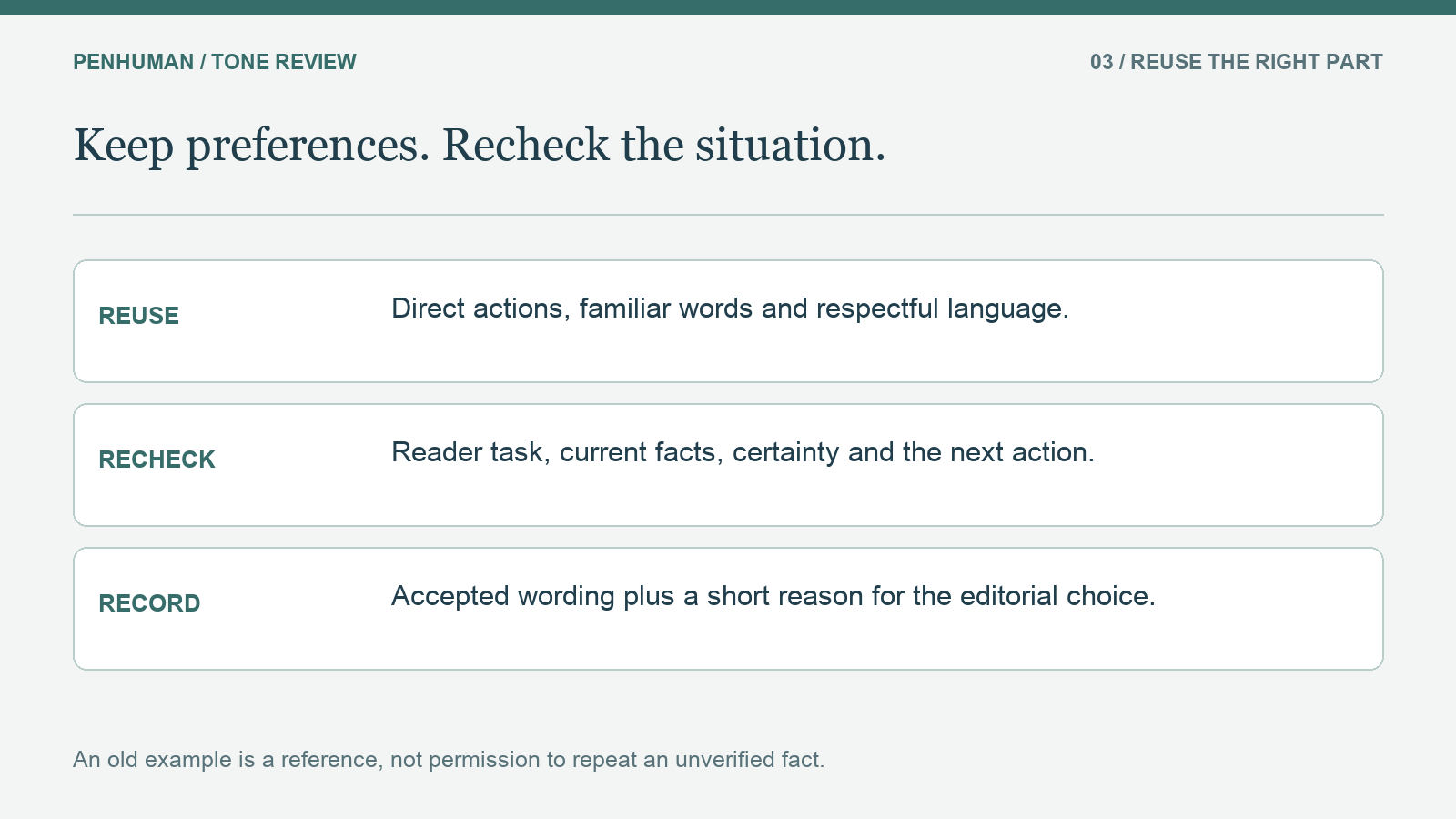
Imagine the fictional Willow Community Choir keeps a brief writing note for its rehearsal notices. Its recurring preferences are direct instructions, familiar words and respectful language. The note avoids slang and unexplained musical terms when a plain alternative exists. Those choices describe a continuing approach; they do not mean every notice needs the same emotional energy. A routine collection reminder and an unexpected change deserve separate consideration. Record the stable preferences where they are easy to find, then add the situation for the current draft instead of copying an old tone label without checking its fit.
In this exercise, the source note says that music folders are on the table beside the foyer. Singers collect a folder before rehearsal and return the empty folder to the cabinet afterwards. No arrival deadline, replacement fee or reason for the arrangement is supplied. The intended reader is a singer collecting materials, and the required action is to find the folder and return it to the stated place. These are fictional source facts, not a real choir policy. Keep them separate from suggestions about warmth or formality so stylistic choices never become permission to change the process.
Write observable directions instead of a string of adjectives
A brief that says friendly, professional, engaging and natural offers a reviewer little to inspect. Replace broad labels with decisions visible on the page. In this case, use direct verbs for the collection and return actions, name the locations exactly, and keep the reminder calm rather than celebratory. Avoid a joke about forgetful singers because the source does not say anyone forgot a folder. This connects tone to specific editorial choices. It also gives another writer a way to disagree usefully: point to a word, sentence or implied attitude instead of saying the passage feels wrong.
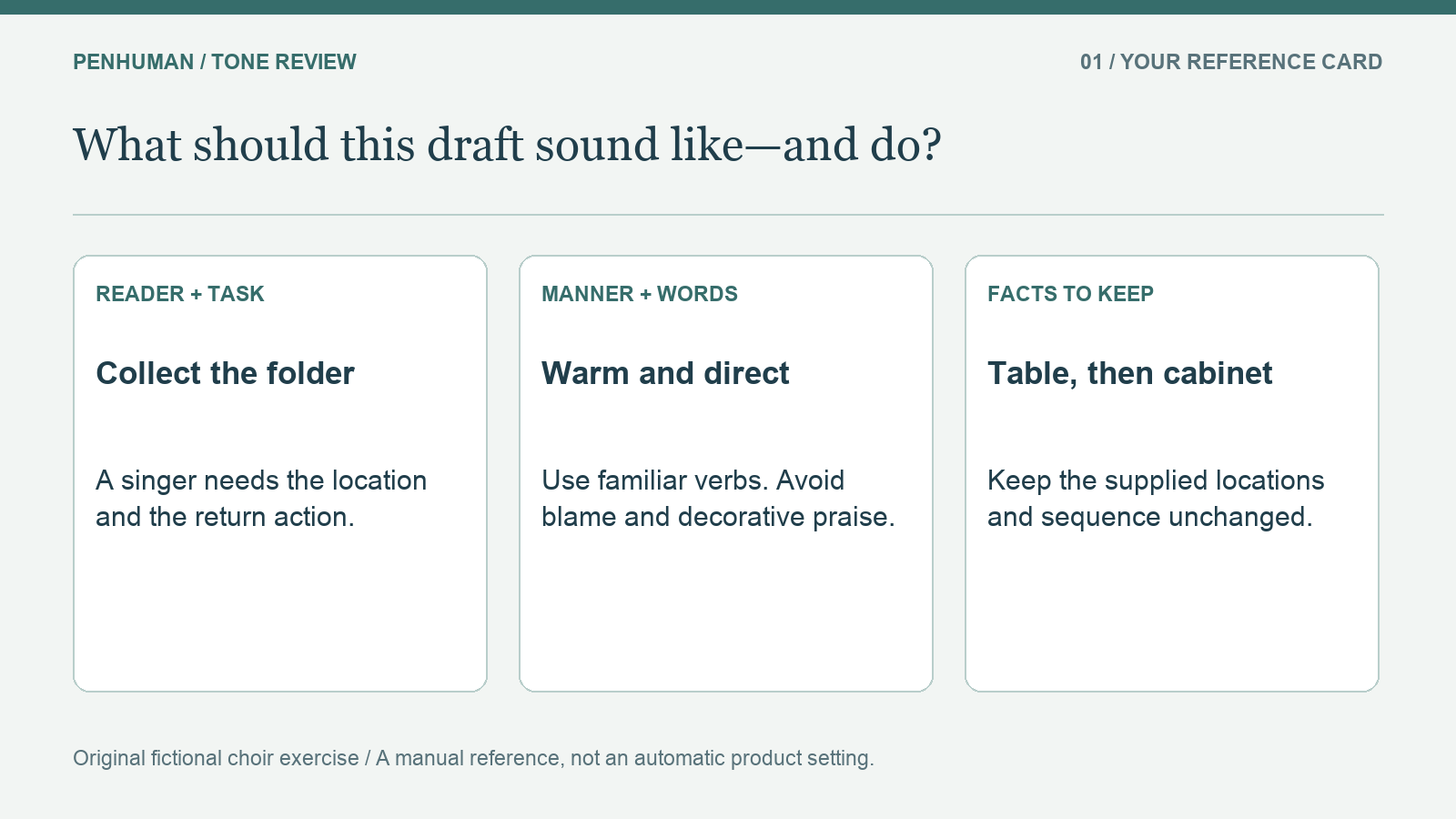
A practical card for the routine notice reads: reader, a singer collecting music; task, find and return the folder; manner, warm and direct; wording, familiar verbs and named locations; keep unchanged, collection before rehearsal and return afterwards; avoid, blame, invented deadlines and extra promises. The card is not finished copy and does not need decorative language. Use it beside the source when comparing versions. If the draft has a real length or formatting limit, record that separately. Adding a shortness requirement by habit risks cutting information that the reader needs to complete the task.
Compare a small passage against the same brief
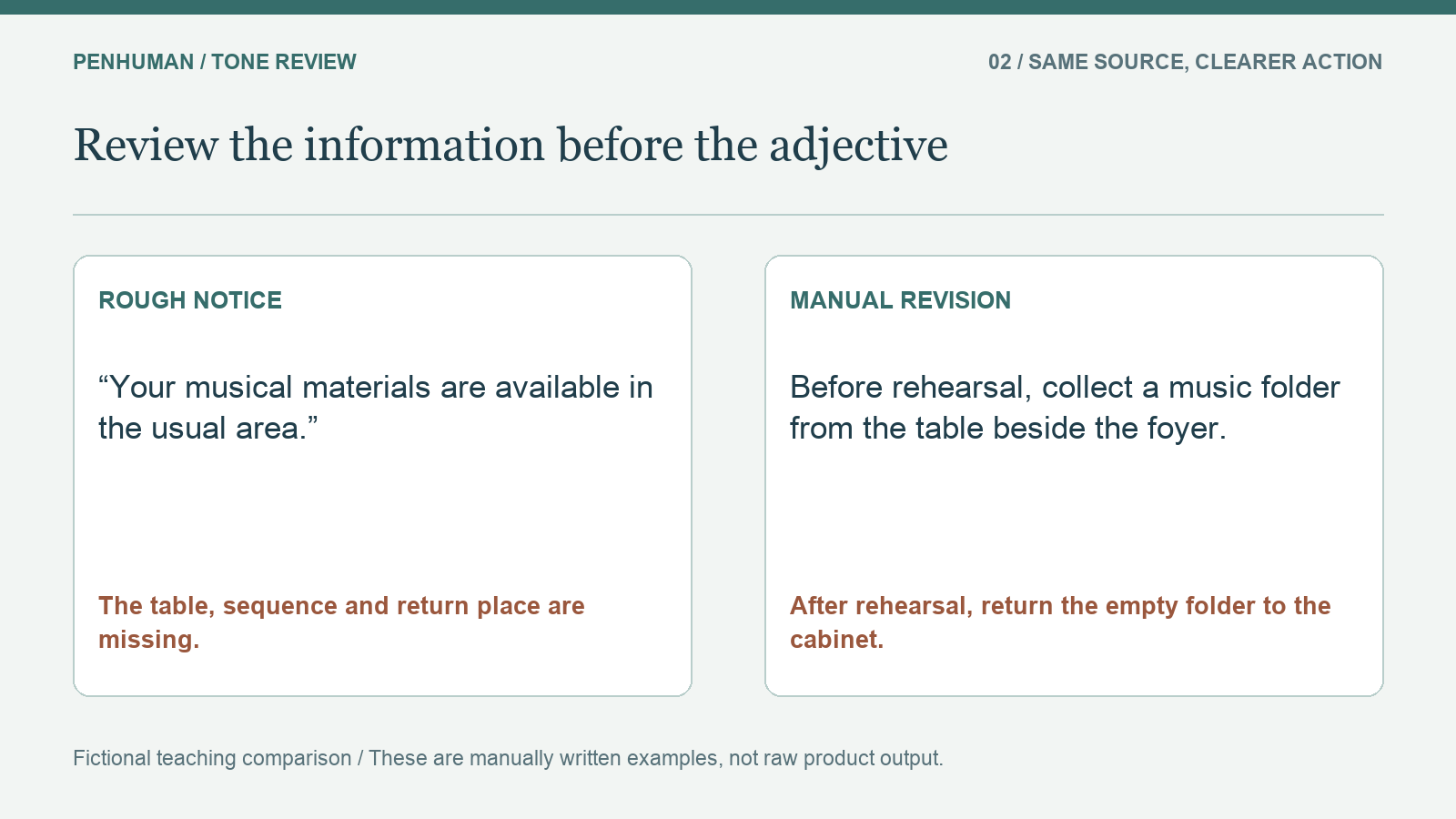
Here is an original rough version: "We are delighted to announce the convenient availability of your musical materials in the usual area. Kindly ensure their appropriate return at your earliest convenience." Its cheerful formality makes the notice sound important without identifying the table, cabinet or sequence. The problem is not simply that it sounds formal. The reader lacks information needed to act. Highlight those omissions before replacing individual words. A tone review is still a content review when an impressive phrase hides the action or leaves a location open to interpretation.
A manually revised version reads, "Before rehearsal, collect a music folder from the table beside the foyer. After rehearsal, return the empty folder to the cabinet." Direct verbs and concrete locations make it fit the brief. It adds no greeting, joke or claim that collection is effortless. A team might choose a short greeting elsewhere, but that choice is separate from the instructions themselves. The revised passage is a teaching example written for this guide, not an untouched Humanizer result. Its value here is that the reason for each editorial decision remains visible against the same source.
Change the tone when the situation changes
Consider a separate fictional notice from the same choir. Its source says that tonight’s rehearsal is cancelled and that a replacement date has not been confirmed. The task changes from collecting materials to understanding a cancellation and its unresolved next step. Keep the recurring preference for direct, respectful language, but remove celebratory phrasing from the brief. Do not label readers disappointed as though their reaction had been observed. It is enough to recognize that the information interrupts a plan and needs a clear statement rather than a cheerful introduction.
The manual notice is, "Tonight’s rehearsal is cancelled. A replacement date has not been confirmed." The brief excludes a promise that an update will arrive tomorrow because the fictional source supplies no deadline. It also excludes an apology on behalf of a named organizer when no such statement has been authorized in the exercise. A warmer sentence is not necessarily a better sentence. Compare its implied responsibility, certainty and next action with the source before keeping it, and leave an unanswered question visible instead of filling it with a reassuring guess.
Use the card to review a wording candidate
When reviewing a candidate, check the facts and required action first, then inspect the tone choices. A phrase such as pick up your folder might fit the routine notice, while collect your folder is equally clear and slightly more neutral. Neither choice authorizes changing the foyer table to a reception desk. Mark a preference as a preference, and mark a source conflict as a correction. The actionable-feedback guide covers that distinction in more detail. Keeping the categories separate prevents a discussion of style from disguising a disagreement about what actually happened.
Save the accepted wording with a brief explanation of the decision, such as direct action and exact location retained. Reuse the note for a similar notice, then check the new source and situation before carrying the wording over. This creates a small working reference through editorial decisions rather than a claim that software has learned your voice. The glossary guide is useful when recurring names or labels also need consistency. Keep outdated examples clearly marked or remove them from the working reference so a previously correct location or deadline does not silently enter a new draft.
Keep the brief beside the draft when using PenHuman
If you use the AI Humanizer for an eligible longer draft, keep this brief as a separate manual reference while comparing the candidate with your source. A style choice or fluent result does not establish that the intended reader, facts or boundaries survived. Read the whole candidate before keeping it; repair an unsuitable sentence manually and distinguish that repair from the raw output. The short quoted notices in this guide are manual examples, so do not pad them to meet a tool minimum. Start with a complete draft that needs genuine sentence-level review.
Basic includes 3,900 Humanizer characters with no scheduled reset and accepts drafts of 80–600 words within the remaining allowance; an account is required. The Word Counter helps you check an actual draft’s length. For accepted output, Review & save opens the Full Editor for manual revision and saving, which are free for signed-in document owners. Optional AI edits still use the appropriate available credits: Humanize uses Humanizer characters, and other AI edits use Generator characters. The reference card remains your own review aid; it does not add automatic fact-checking, a saved brand-voice model or guaranteed adherence to the brief.
Frequently Asked Questions
Is a tone brief the same as a brand style guide?
A tone brief is narrower. It records the reader, situation and editing choices for a particular draft or recurring task. A broader style guide may also cover terminology, formatting and a consistent organizational voice. In the choir exercise, familiar words and respectful instructions recur, while the cancellation notice requires a different level of enthusiasm from a routine reminder. Reuse the stable preferences without treating every message as the same situation. This guide proposes a practical reference card rather than a universal naming standard for editorial documents.
Can a tone label guarantee that a rewrite sounds like me?
No. A label such as warm or formal leaves many choices open and does not establish personal-voice fidelity. Examine the actual wording against your brief and source, then decide which choices fit. The fictional choir examples demonstrate manual editorial decisions, not a measured result from a style preset. Keep the original candidate separate from your corrections if you are evaluating a tool. An accepted revision records your judgment about that passage; it is not evidence that all future drafts will preserve the same voice or meaning.
What should I keep for the next similar draft?
Retain the short brief, the accepted passage and the reason for the important choices. Separate recurring preferences from source facts that apply only to the current notice. For example, direct instructions may remain useful, while a collection location needs confirmation each time it appears in a new source. Check whether the reader’s task or situation has changed before reusing the wording. A saved example is a starting reference, not authority to repeat an old fact or an unapproved promise in the next message.